
Richard Haly’s Night Class
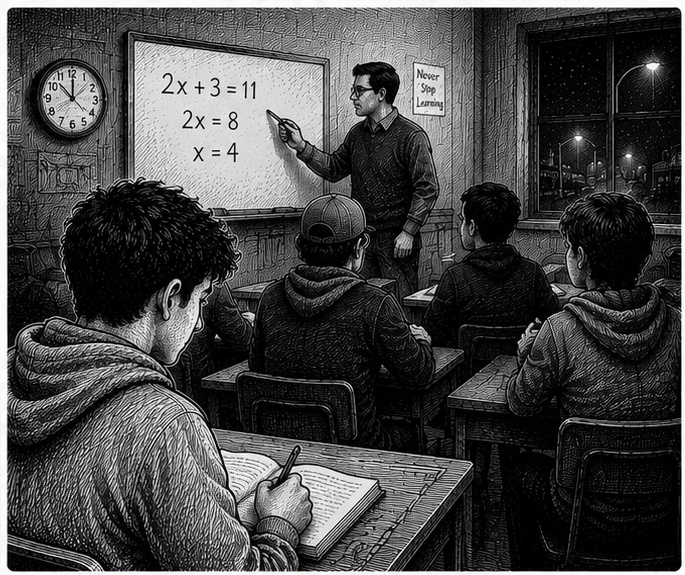
I fell in love with learning in the spring of 1995. Richard Haly’s night class was different than any class I had taken. I would later learn that it wasn’t entirely unique, but it was novel to me at the time. It was called a seminar, and he extended the kind of respect and agency to our motley crew of dropouts that he would have offered a small group of graduate students. That meant that he made space for our ideas. He wanted to know what we thought, and he treated us like intellectual peers. In all my years of schooling, my teachers mostly wanted their own words to come out of my mouth and pen.
Richard was a scholar of Aztec poetry. The Aztecs recorded their thoughts and emotions in pictographic scenes, usually carved in stone and brightly painted, so their poetry is also a fine art, according to our Western conception and distinction of such things. One day in class, I made an observation about a figure in the shape of a turtle, commenting on its similarity to a drawing of a deity. Two years later, while I was taking another class with him, I went to visit Haly during his office hours. As I got up to leave, he called me back and showed me an endnote in a journal article he had just published in which he cited that idea to me! I believe that was my first official academic citation, and it inspired me.
The change wasn’t immediate. I still had a long way to go as I clawed my way back into school, changed my major to economics, and battled disabilities and bad habits. But something had shifted. I was interested. I wanted to do well. Ideas began to captivate me, and my mind expanded…no, exploded. The change to econ meant arts and sciences core curriculum: German language credits, Russian literature, more economics, and with it, more math than I could handle. By the time I realized I was mathed out, I had earned the minor in econ, completed the core requirements, and only had thirty credits to go – just enough for the major in anthropology. So as I finished my fifth year and my friends graduated and moved away, I changed my major and earned straight As for the first time in my life.
Archaeoastronomy
In the spring of 1999, as I approached graduation, Haly invited me to accompany him on a National Geographic expedition to Tlaxcala, Mexico. Above the valley east of Mexico City, stands La Malinche, Mexico’s fifth-tallest peak, at 14,636 feet. Across the arid Tlaxcala Valley, beneath the towering summits of Popocatépetl and Iztaccíhuatl, which stand guard over Mexico City and the whole of the country, researchers had found a cave strewn with fertility figurines. The small to medium-sized clay statues held tiny babies in their protruding abdomens, clearly representing pregnant mothers. Twice per year, Venus rose as a morning star directly above the peak of Malinche when viewed from the cave.

Our work sought to understand how local inhabitants incorporated this natural phenomenon into their ritual practices. We also wanted to know how they had blended Catholic beliefs with ancient myths that pre-dated the Spanish conquest. About 1.7 million contemporary Mexicans still speak Nahuatl, the language of the Aztecs. Haly was a Nahuatl speaker, and therefore invaluable to the team.
During our two-week expedition, we climbed the peak and surveyed the surrounding hillsides for caches of broken pottery and obsidian flakes used for ritual bloodletting. We spoke with Nahuas, especially the abuelas and abuelos, who remembered and continued more of the ancient practices than the young people. The trip meant more to me than just the research, of which I frankly understood little, given my inability to converse. But I learned so much about Mexican history and culture in the National Museum of Anthropology and in my conversations with the professors. I learned about myself and my limitations when I came up against some rancid chicharrónes at the evening meal following our summit. Several days of “Oh…mi estómago!” complaints to the nurse followed, which was all the explanation I could muster in my broken Spanish, amid the diarrhea, vomiting, and cramping. But I made it through. And I kept going.
Conversation with Karina
A decade later, on my first trip to Chile to explore dissertation research topics, I met Karina. She was a friend of my friend William at Syracuse University, who had lived in Santiago for a year when he was an undergrad. I needed friendly faces at that moment in 2008. Karina and I had a nice dinner in the Providencia neighborhood where she lived, and as we approached her home, she turned to me and asked, “So what exactly are you doing here?” I was confused because we had spent the evening talking about Chilean history and culture, including the current state of the Mapuche political movement and its past, in which I had explained the research I was pursuing.

“What do you mean?” I asked, “I’m trying to figure out if the project I have in mind is viable, so I’m spending time in the archives to get a sense of what is contained in several collections of materials.”
“No, I understand that,” she said, “but what I don’t understand is why you would come all this way to study our history. Why not study your own history in the United States?”
I paused. I flipped through a half dozen explanations for why I wasn’t that interested in the history of the United States, which included a fair amount of disillusionment with our foreign policy in the 2000s, and a general sense that I knew that history pretty well, having grown up there. Before I could answer, she continued.
“I mean, why Mapuche history especially?” she asked. “You don’t know anything about being Mapuche, or even about being Chilean. And how could you possibly contribute anything of value to something you know so little about?”
I paused some more. Eventually, I said, “I think I might be able to learn something about myself by learning about people’s experiences that are very different from my own.”
I hadn’t really thought about it the way I said it to Karina, but I later realized that much of my fascination with indigenous peoples and the history of cross-cultural contact in the Americas was driven by the sneaking suspicion that some kind of key to myself was hidden out there in the world. And the further and more exotic the places I searched, the more likely I was to find that treasure. I know now that parts of my search were naïve and other parts were problematic in a culturally imperialist kind of way. But the core of that idea rings true.
School, education, and intellectual curiosity hold at their bottom a search for the self. Who am I? How do I fit into the world? What can I possibly add to it?
Programmatic Expertise
| Indicator |
| Has developed a set of knowledge and skills relevant to area of school leadership. |
| Implements a practice of ongoing professional development to remain current with area of expertise and/or emerging job responsibilities. |
| Maintains a network of professional peer connections outside of EPS. |
We might imagine Programmatic Expertise as a house or another building. At its base is laid a foundation of knowledge and skills that provide a platform for future growth. Upon this sturdy bottom, the structure’s frame is developed, one two-by-four at a time, laid out so that the space inside is organized to make it inhabitable and useful. Like any building, our house is situated within a larger landscape and is, in fundamental ways, connected to other houses and utilities across the surrounding terrain. Power, water, and information are pumped into the building, making life inside interesting and allowing the person living there to grow and thrive.
The Foundation
The Upper School Head at Manlius Pebble Hill (MPH) hated the teacher he hired me to replace. I didn’t know it at the time, but the two of them fought like cats and dogs. Peter Wozniak, or Dr. Woz as the kids called him, was a PhD in Russian history and a former professor who captivated students with animated lectures as he championed the kings and queens of Europe. Chris Hempel had been a founding principal of one of the first Big Picture Schools, a network of alternative high schools where learning was structured around internships, and student time on campus was led by advisors who were purposefully NOT trained in any particular academic discipline. The other finalist for the job was a friend of mine, Matt Twomey-Smith, who was also a friend of Woz and had worked at the school on and off for a few years. In all honesty, I think Chris probably favored me because I wasn’t Matt.

Many other teachers on the faculty struggled with Chris too, so it wasn’t like Woz was an outlier. Chris had never been a classroom teacher, and he couldn’t really relate to or understand the challenges they faced day to day. He had cool ideas. He started a senior thesis project that became a capstone within the Upper School experience, and he introduced a modified advisory program to the school, which grew in substance and importance over time. But he wasn’t one of them. He didn’t speak the same language. And honestly, he didn’t really try. He used to tell this tired story about how the best swim coach he ever had couldn’t swim to save himself from drowning. It might have even been true, but they couldn’t hear it.
I don’t think it’s possible to lead a group of people without having some kind of credibility that they respect. By the time I started teaching at an independent school, I had taught for five years as an adjunct professor, teaching and research assistant, and mastered a field of knowledge. When I became a division head, I had taught in the upper school for four years. And when I came to Eastside Prep, I had been an Upper School Head for five years. I gained experience at each stage, and while that was valuable in and of itself, it also built credibility.
Experience in the thing one is leading people to do is not the only form of credibility. It can also be built on shared knowledge or expertise in a related field, even if that field is distant. Credibility often comes from interpersonal connection, lived experience, or many kinds of affinity. But it has to be relatable, and the people one leads must have some respect for it. Credibility serves as a foundation for the many and varied skills used daily in a leadership role.
The Structure
As one transitions from a role of doing to one of managing, supervising, and leading, one encounters new kinds of challenges that require new skills. Some skills are transferable, but even those need refinement and shaping as one adapts to a new kind of work. Much of the learning happens on the job. Some come from trusted mentors and colleagues. As I transitioned into school leadership, I found it essential to adopt, build, and maintain a practice of ongoing professional development. Reading has formed a core component of my professional growth from the beginning.
When I was a graduate student, I had to immerse myself in contemporary writing related to my field of study. At the time, that meant I read broadly about 20th-century Latin American history, especially the ways that nation-building projects were inherently racialized. This reading prepared me to propose, research, and write my dissertation, the story of an indigenous political movement that contested the Chilean nation-building project. The reading taught me two things: the field of knowledge was finite and could be mapped, and the field was constructed of discourse, a gradually unfolding, written conversation between thinkers.
Before I had that experience, I imagined knowledge as boundless and limitless. But human knowledge is constructed, one sentence, chapter, or trilogy at a time. And it has limits. There are things we don’t know yet. And it is imperfect. Some of the things we think we know now will turn out to be false, or at least incomplete, as the conversation unfolds. My exploration of the geography of knowledge now includes several countries I never inhabited in school.
From the moment I began teaching high school, I realized I needed to know more about learning disabilities and differences to truly meet my students where they were. I had to learn about the ADHD brain, how to chunk and scaffold instruction, how to differentiate assignments and assessments for different kinds of learners. Howard Gardner’s concept of multiple intelligences became a central hub that connected ideas in this landscape.
Also in my first years of teaching, I came to realize that my job included a great deal of emotional labor. At first, I couldn’t figure out why I was so tired when I came home at the end of the day. After all, I had only walked around the classroom, teaching was really just talking, and I did it for only three hours a day. But I was feeling things, and so were my students. We were feeling our feelings together and exchanging energy that sometimes energized but often depleted us in the process. So I started learning about emotional intelligence and how it was developed. Daniel Goleman, the Six Seconds Emotional Intelligence Network, and Marc Brackett’s work at the Yale Center for Emotional Intelligence were essential in this phase.
You might be able to see from this description how this reading about emotions fits within Gardner’s intra- and interpersonal intelligences. It’s a set of nested ideas, really, and as I continued, I learned about myself while learning about students, teachers, how to work with them, and how to lead.
One component of self-discovery led me to the realization that I have a history of trauma within my family. For a year and two summers, I read voraciously on the subject of trauma, trauma’s physical effects on the body, trauma recovery treatments, and eventually about trauma-informed teaching practices, a relatively narrow field to date, that last one. Over the past year or two, I have become fascinated by the concept of coaching as a method and skill set for leadership, and I’ve been reading about and experimenting with these practices with several colleagues.
This work doesn’t happen in isolation. All the thinking inside my brain is a form of dialogue and extending that dialogue outward to include other thinkers puts vital nutrients into the soil to grow the little idea plants. Coaching, for example, began five years ago with my involvement in the Northwest Association of Independent Schools (NWAIS) Emerging Leaders Institute (ELI). But that story has another tributary, so let me back up to the year I transitioned into school leadership back in New York.
Connectivity
I didn’t really know anything about leadership when I became a leader, so I had to learn fast. At that time, the New York Association of Independent Schools (NYSAIS) held a three-part workshop series for new division directors called Out of the Frying Pan, Into the Fire. It was designed and delivered by George Swain, a friend of my buddy Jim Eagen. George was formerly the Middle School Head at Poughkeepsie Day School, and Jim had been the Middle School Head at MPH when I started teaching there. Three times that year, I trekked down to Manhattan for a workshop where I connected with about a dozen other folks from around the state who were also in their first year of school leadership. By the second visit, the cohort would become a lifeline as things fell apart around me back in Syracuse.
Our school was undergoing a financial crisis and major restructuring, as you will read about later on in the story. Suffice it to say, I had not made my way through even half of the faculty observations that first year, when the bedrock beneath my school began to shake, and major faults opened up all around me. I had to pivot, and pivot fast, to simply care for the students, teachers, and parents I was leading amid the uncertainty surrounding us. Having a group of sympathetic, understanding, knowledgeable, yet comfortably detached, people with whom to process what was happening sustained me and helped me survive.
The support was both practical and emotional, if a distinction can even be made between the two under such circumstances. I didn’t know George before that experience, but he became a kind of mentor to me and an important professional connection. At the time, George was the Director of Accreditation for NYSAIS and responsible for supporting schools and coordinating the committee that visits schools and carries out the association’s accreditation process. Two years later, as my school prepared for its accreditation visit, I was asked to lead the self-study phase. George placed me on a visiting committee at the Stony Brook School on Long Island, helped me prepare our self-study process, and built a team to come to MPH and conduct our accreditation. Through that work, I learned so much about how schools are run from the process of preparing, organizing, evaluating, and presenting the accreditation.
When I moved across the country to join EPS, George introduced me to Betsy Watkins, the NWAIS Director of Accreditation, and recommended that she put me on a team. Betsy later joked that I was the easiest recruit she ever had, volunteering before I even arrived in the state. It took a few years for that connection to get me on an NWAIS visiting committee, because the association builds visiting teams with people from schools with an upcoming accreditation, so they will have recent experience with the process, which is always evolving. But the tree bore fruit in other ways more quickly.
Five years ago, Emily McGrath, the NWAIS Associate Director and leader of the association’s professional development efforts, asked me to serve as an Emerging Leaders coach, which I have done ever since. The ELI program guides aspiring school leaders through a yearlong experience where they participate in a series of workshops and guided exercises as part of a cohort, and simultaneously pairs them with an experienced school leader who coaches them along the way, helping to identify goals and priorities and discern new directions that they might like to chart for their careers. I have found this work incredibly rewarding and fulfilling. It’s a nice way to step out of the day-to-day management and firefighting that are part and parcel of divisional leadership, and to play a supportive and meaningful role in someone’s professional journey.
My work with NWAIS has since expanded to include serving on the planning committee of the annual Leadership Institute and hosting the Division Heads and Assistant Heads Virtual Roundtable. That work is fun and invigorating, and it also informs my work and leadership within EPS, but coaching is probably the best way to close the loop on the Programmatic Expertise category and illustrate the value of connection with a network of peers. Over the past four years, I have had the great privilege of working with Verity Sayles as she transitioned into school leadership as the Associate Head of Upper School. This year, I’ve also begun to apply coaching techniques in other areas of my work, including support for discipline leads, framing teacher observations in new ways, and thinking about ways to better support Resident Teachers and new faculty as they join the school community.
I also helped to connect the Upper School Heads at the seven peer schools in the Seattle area several years ago by starting an email group and organizing some gatherings. We’ve had a few lunches, answered each other’s questions about school problems and processes. And I’ve hosted groups from other schools on campus, most recently from the Bush School, and previously for a breakfast and informal workshop led by Sam Foote on Restorative Practices and Student Discipline.
Leadership Skills
| Indicator |
| Develops and articulates a compelling vision to guide projects and teams. |
| Sets aspirational and achievable goals; adapts to circumstances and adjusts goals as projects unfold. |
| Monitors progress and implements measures for accountability. |
| Makes decisions efficiently and effectively, navigating the tension between expedience and circumspection. |
| Cultivates leadership skills and supports the professional growth of team members. |
If Programmatic Expertise is a house, Leadership Skills might be imagined as the family vehicle that takes people out into the world to lead lives of engagement. From wood and plaster to steel and plastic, the materials that build a solid home are different from those used in a vehicle. Even a pickup truck can carry only so many two-by-fours and sheets of drywall, and a house can’t be packed up and relocated. If one is to succeed in subsequent career stages after transitioning into a leadership role, new skill sets must be acquired. We need a new vehicle entirely.
Windshield and Mirrors
From the driver’s seat, the whole road opens up before you. Depending on the shape of the road and contours of the land it traverses, one can see somewhere between a hundred feet and several miles. One surveys the horizon, looking as far ahead as possible, then brings the gaze back to the front of the vehicle and scans from side to side to spot obstacles and predict their path. It is important to check the side and rearview mirrors to gain a sense of the car’s position within the surrounding environment and to monitor moving objects on all four sides.
In my time as a school leader, navigating the environment as the driver described above, I have developed far more ideas than one could execute individually in many lifetimes, and that is especially true for any project that necessarily requires bringing many people along. I have sometimes joked that a 10:1 ratio of bad ideas to good ones is an aspirational target. But as I’ve gained experience, I can more quickly see which ones are which and why, so I can avoid wasting time developing projects that will be hard to get off the ground or garner support. Over the past several years, the incorporation of restorative practices into student discipline has provided an example of both a vision and its limitations, as well as my partial ability to implement and champion the work.
Following the pandemic, we began to experience more disruptive and harmful bias incidents among Upper School students. Responding to the incidents was difficult for many reasons. On one level, the infractions themselves were usually verbal, stemming from something offensive that one student said to another or, occasionally, to third parties, which made it difficult to verify the report if a student denied having made the offensive remark. If they did acknowledge the statement, students would often explain it away as a misguided attempt at humor. Recognizing the identity factors at play, students and their parents would often respond defensively, even aggressively, to deny or minimize the harm caused – classic shame responses. Meanwhile, students and faculty became more and more frustrated with what they perceived as a deteriorating school climate in an era where racial, ethnic, and gender-based discrimination was being confronted more firmly.
Traditional responses to student discipline, such as detention, demerits, or other forms of retribution, were counter-cultural in EPS’s high-trust environment. Yet these incidents were eroding trust rapidly. I began to explore restorative justice models of school discipline. At first, I experimented by offering students pathways to restoration, like formal apologies, reconciliation through dialogue, and even campus projects to restore faith and trust. In some cases, these efforts worked. On the whole, injured parties and the community at large viewed such responses as weak and sought more substantial penalties, while the offenders felt they had been wronged by the potential for embarrassment and shame associated with confronting their behavior.
I convened a group of teachers, counselors, and equity/inclusion specialists to advise and help me develop a model for a more systematic approach to restorative justice. I led faculty conversations about proactively establishing a restorative culture in advance of harm and injury, so we could “restore” our community when harm occurred. I partnered with Verity Sayles as the Assistant Division Head to expand upon the number and kinds of follow-up we could do. Meanwhile bias reports continued, even expanded in number and severity. It felt like we were chasing a speeding car, unfettered by speed limits or safety concerns.
In the past two years, as Verity’s role expanded in scope and title to include more student discipline work, at the same time we hired an EICL Director to lead our work combating bias in the school. Now, through an emerging partnership with members of the Well-Being Team, it feels as though we are finally making headway in developing a more systematic approach to restorative practices at EPS. I would hasten to note that my personal involvement with this work has actually diminished as the efforts have expanded. Success was only possible with more people, more time, and greater shared purpose and execution. While I am pleased to have contributed to the project in my own modest way at the beginning, all the credit belongs to those who came later and took a nugget of an idea and shaped, molded, and carved it into something useful.
Navigation Screen
When I was a kid, we had no money. All of our vacations were road trips, and they usually involved sleeping outside or on the living room floor at a family member’s home. Given the distance between our family and us, these trips included long days in the car, and sometimes detours around traffic, accidents, and road construction. In those days before Waze, my dad would pull out a paper map, unfold it across the steering wheel, and try to plan a way forward as he steadied the wheel with his knees. My, how far we have come, with computer screens providing turn-by-turn navigation and real-time updates from the center of the dashboard!
As important as a driver’s vision of the road ahead, and the metaphorical portrait of the destination in their head and the ability to articulate that to others, a leader must be able to chart a course to that destination and navigate around obstacles and challenges that emerge once the journey is underway. To my knowledge, no technology has yet been developed that makes this process as user-friendly as the nav screen in your car, although artificial intelligence may help you produce a map more efficiently.
Over the years, I have developed a sequence of annual steps that help me design, establish, and execute a handful of large-scale projects that the Upper School faculty can work on together. Each spring, I initiate a conversation about what’s working well and what challenges we face as a division. I survey teachers to solicit feedback on my personal practice and to propose projects we can undertake in the upcoming year. Several years ago, one such project focused on how our students responded to grades and the problematic interactions that ensued when students challenged teachers’ assigned grades.
We began the following year with a revised introductory statement to the Assessment and Grading section in the Student Handbook that framed grades as a form of feedback. That language also made clear that while students are encouraged to ask their teachers for clarification of grades, they were to consider the teacher’s explanation as the final word and not engage in argument or debate. While that language helped me follow up with a few students in acute cases and presumably offered teachers some language to rely upon in contentious conversations, it by no means put a stop to the pressures students felt to achieve, nor the arguments prompted by those feelings.
The next year, Sarah Peeden joined EPS as the Middle School Head. Sarah took an interest in this project amid a number of initiatives we collaborated on to create alignment between the divisions. Sarah pushed us to take a step back from the grades themselves to consider the assessments they reflected, and even before that, the learning objectives that the assessments were intended to measure. In the process, we spent an entire year working with the faculty to map our learning objectives and a subsequent year to move forward and explore alternative metrics by which forward-thinking schools measure and report student progress. Subsequently, “Reimagine student assessment practices to ensure mission alignment and student well-being” became a strategic priority in the school’s five-year strategic plan.
Sarah and I, along with other school leaders and the faculty at large, became interested in further exploring competency-based assessment and the tools developed by the Mastery Transcript Consortium. So, in the third year, we developed our own sets of competencies, specific to each discipline, to gain familiarity and facility with this alternative assessment scheme. In the fourth year, Sarah synthesized the work of the various disciplines to collate one set of competencies that could potentially be implemented school-wide. Meanwhile, Jonathan Briggs, Director of Strategy, Technology, and Innovation, and Matt Delaney, Director of Academic Design and Integration, developed a curriculum-mapping tool that provides essential information to advance the grading and assessment project.
I am currently working with two community partners to pilot a competency-based assessment as we develop student internships that may one day carry academic credit. Our Independent Curriculum Facilitators have indicated interest in experimenting with the competency model for the student work they supervise. I have no idea if the school will ever fully implement or transition away from a traditional “seat time” credit model and the A-F grading scale, nor do I know if a competency model would be the solution if we did. In fact, it has been important to our work to reassure faculty that there was no such foregone conclusion that we were working toward. But the ability to set reasonable goals, reassess, and then modify the next phase of the project has led to some very interesting and innovative work on this core component of the school experience.
Instrument Cluster
Back when car hydraulic systems were more sophisticated than the electrical system, the driver had to read gauges that measured the engine’s health and performance. One had to watch the tachometer to make sure the revolutions per minute didn’t go over the “redline,” or the engine might explode. If the water temperature climbed too high or the oil pressure dropped too low, the engine would lose vital lubrication and/or overheat, and the parts could melt together, leading the engine to seize. Nowadays, the vehicle’s central computer monitors these systems and illuminates a blinky light to make the driver aware of imminent failure. No such system is built into the mechanics of a school, so the leader must develop their own systems to monitor health and safety within the machine and learn to read them carefully.
One such system in the divisional leader’s toolkit is the process, timing, and format of their classroom observations. While there are a handful of widely shared systems that leaders can borrow from or implement in full, those “store-bought” systems tend to be comprehensive and therefore cumbersome, in my experience. Over the years, I have experimented with a handful of different strategies. I first moved from large and complex toward simple and straightforward. In recent years, I’ve been shifting the system’s focus towards teacher-centered goals and towards offering feedback that teachers want, because I believe teachers usually have a strong sense of what’s working well and are already taking steps to improve what isn’t. Along with this change, the system has pulled complexity back in, but the teacher’s focus seems to make it work better.
In my early years as a teacher, I was observed and evaluated with a form that included many checkboxes for the observer to mark, and, if you were lucky, a sentence or two to explain what they had seen. I found it less than helpful as a teacher, but I didn’t really know an alternative, so I began my divisional leadership with a similar model, although I deleted several fields from the form I inherited. In my second year as a division head, I visited Soroe Academy, the oldest school in Denmark, and my school’s sister school. While there, I spent a day shadowing the school’s rector (equivalent of the head of school), Kristian Jacobsen.
Kristian was an experienced school leader and was well known in Denmark as a school reformer. He had been placed at Soroe by the national education ministry to breathe new life into that storied institution. The Academy’s roots extend back to the 12th century, when it was founded as a monastery and school for the training of monks. Over the years, it had experienced several declines and rebirths, and Kristian was in the process of revitalizing the fairly traditional pedagogy of many long-tenured teachers in the school. In the course of our time together, he shared with me his “five dots.” Although Kristian’s English was excellent, he didn’t seem to know the vernacular for a “bulleted” list, so he used the word “dot,” which has stuck with me ever since. “Kristian’s Five Dots” made up the core of his educational philosophy and leadership practice. Everything he did was oriented toward implementing those principles for every student, by every teacher, in every classroom. They are:
- Safe and positive learning environment
- Clear, adapted, and differentiated learning goals
- Feedback for teacher and students
- Variation and structure in teaching
- Student engagement
The simplicity of this structure appealed to me, and try as I might, I really couldn’t identify many other aspects of teaching that didn’t fit into one of these categories. Although I never fully copied Kristian’s rubric, I did find myself thinking with these ideas and searching for ways to distill my practice into irreducible components. Over several years, I found that I could offer teachers three categories of feedback that just about everything fit into. The first was an accounting of activity and time. This became the lesson outline and a record of how time was used. Second, I could provide feedback on the instructional design, that is, the way the teacher put together a series of activities or conversation points to guide students through the lesson. If the Agenda identified the lesson structure, Instructional Design offered commentary on how it worked and why, or why not. Third, I tracked Student Engagement to reflect on how students engaged with the teacher, the material, and one another. Were they active, passive, listening attentively, distracted, disruptive, or some combination of those things?
While this simplified practice works well for me, I was challenged to observe and debrief with 45 Upper School teachers more than once per year. I also began to hear from teachers that they were seeking deeper and more sustained kinds of feedback. One year, Sam, Matt, Sarah, Bart, and I experimented with a “distributed observation” model in which we each took on a handful of teachers and visited their classes in a series of three observations. This year, I collected resources from several models and asked faculty to review them, identify a handful of criteria they would like me to look for, and complete a pre-observation template they shared with me in advance of my visit. I paired this new tool with a series of “mini observations,” unscheduled drop-ins lasting about 10 minutes, to complete 5 or 6 impromptu observations in a class period.
This year’s experiment has received mixed reviews. The template and sample documents were new, and people had a hard time understanding what I was asking for, which therefore made it difficult to make the experience personally meaningful. This innovation hasn’t solved the scale problem, and a faculty of 45 is probably too large for one school leader to meaningfully observe, much less evaluate. Looking ahead, I have some ideas for merging the distributed model with the teacher-centered model through a portfolio that teachers would maintain and update year to year. This might also be a valuable link between my annual practice and the less frequent PDP experience, providing material and insight to seed that work once the PDP cohort is assembled.
While the PDP is a purposefully growth-oriented model, it does provide substantial accountability for a teacher’s performance. Although the annual observation is primarily about monitoring performance and understanding a person’s practice, it is sometimes perceived as evaluative and can therefore be somewhat intimidating for teachers. In addition, there are times when major performance concerns need to be addressed systematically. So in collaboration with Sam and Sarah, I have developed a formal Performance Improvement Plan to guide such work when it is necessary. This work is difficult and sensitive, so I endeavor to be firm, yet gentle, and overwhelmingly supportive when walking through such an experience with a teacher.
Of course, there are dozens of smaller, more quotidian forms of accountability that inhabit my practice on an ongoing basis. When I learn of something unusual or potentially problematic, I try to lead with curiosity in a personal conversation. In more significant circumstances, I may follow up a conversation with an email to create a reference point and document it. In each of those, I endeavor to speak and write with clarity and compassion and affirm my ongoing support. I find the concept of a “warm demander” is a helpful aspiration.
Pedals, Shifter, and Steering Wheel
A modern car is a complex system of interconnected parts and subsystems. Operating a vehicle requires multiple inputs from the driver, each one connected to a different system. Sitting in the driver’s seat, the driver manipulates the accelerator pedal, which is connected to the engine and provides power; the steering wheel, which links to the chassis and controls direction; and eventually the brake pedal to slow or stop the vehicle, sometimes quickly to avoid a crash. Most transmissions today handle the shifting automatically, but in a previous era, the driver had to manually control the interface between the engine and transmission with their hand and foot. Some still prefer this method for its simplicity, efficiency, and effectiveness, and for the pleasure of driving with both hands and feet. Operating a vehicle connected to so many different systems requires dexterity, coordination, and the mitigation of competing extremes.

In a school environment, a leader must similarly make numerous decisions, sometimes daily and in the midst of other duties, that are all interconnected. In addition, one must navigate an array of omnipresent tensions, often between competing goods. One of the most central is the goal to include many individuals and constituencies in decision-making processes, while moving expeditiously within a fast-paced organization to stay nimble and responsive. Independent schools, including teachers, parents, and students, have high expectations for inclusion in conversations about institutional change and the institution’s ability to adapt quickly to individual and emerging needs without bogging down in bureaucracy. Throughout my time as a school leader, I have endeavored to find ways to speed up and streamline regular tasks and functions, while remaining patient and thorough with big questions and large-scale changes.
One such example is the annual process of developing a staffing model for classes in the upcoming school year. This project spans about three months, from January through March, every year, and determines the classes the school can offer students and the sections that comprise each teacher’s core responsibilities. As such, it is both a regular, annual process and one that feels high-stakes for everyone involved. Recognizing that, I have historically implemented the process in four parts: 1) building a preliminary staffing model to determine which courses we can offer, 2) holding a series of individual meetings with each teacher to ask their preferences and priorities for those offered classes in the upcoming year, 3) reconciling the number of student requests with the preliminary staffing model, and 4) circling back to any teachers whose lines have changed in the course of the previous steps to discuss and reconcile preferences with needs.
Last year, I tried to improve efficiency by postponing the second step until after we received student requests, then meeting with every teacher in a single stage instead of two. I reasoned that I had most of the information I needed to move forward in the process before connecting with teachers, and that the most crucial needs for those meetings (from my perspective) stemmed from sorting through a handful of misalignments driven by shifting student demand. However, this annual conversation is an important touchpoint between teachers and their direct supervisor. It’s not only about which classes they will teach the following year, but it is also an opportunity for me to hear how things are going with current classes, changes and challenges teachers are facing, and for most teachers, the one significant moment in the year where they can express the bigger picture, longer-term directions they want to pursue in their teaching. In a small number of cases, I made poor choices because I didn’t have recent information from teachers. More broadly, teachers and I missed out on this important moment in the winter to check in with each other. By the time we met later in the spring, the schedule was largely complete, and many teachers felt I had made decisions unilaterally, even when their needs and goals were met. I learned a valuable lesson from this experience, and it was a helpful reminder that, in schools, the process is often as important as the outcome.
Passenger Seats
Most cars, especially those suited to be utilitarian family vehicles, seat more than two people. Even a modest economy sedan can seat three across the back bench seat, and minivans and some SUVs seat seven or eight with “third-row seating.” From the “way back,” as we used to call our family station wagon’s rear-facing third seat when I was a kid, it’s really hard to see the road ahead, and one is quite removed from the act of driving. When children are young, we place their small bodies in car seats, and then booster seats in the back because it is safer. As they get older and bigger, they can move to the front seat, which, for a time, may become a contest between siblings for that privileged space next to the driver.
As teenagers approach the age at which they may begin driving, most take a driver’s education class. Such a class begins with classroom learning, virtual or in-person, and/or internet modules. Eventually, the teacher takes a small group of students for a drive, explaining the driver’s actions and talking through the decision-making process. Finally, the teacher moves to the passenger seat, where they may have an auxiliary brake pedal for emergencies, while the new drivers take turns practicing, first in a parking lot, then on quiet residential streets at slow speeds, and finally on busy urban or suburban highways. The student is gradually introduced to driving, practicing their skills in less risky, somewhat protected spaces.
A transition to school leadership, and the development of leadership perspective even for teachers not in formal leadership positions, is similar to the move forward in a vehicle, from back seat, to passenger seat, to driver’s seat. Perspective changes, and the road looks different when it is right in front of you, especially when the wheel is in your hands. There’s even a common phrase for the act of calling shots from outside of the zone within which one can have a decision-making perspective: back-seat driving. In my work as a divisional leader, I endeavor to empower teachers to make their own decisions by broadening perspective through a gradual process of exposure, sharing insights, and my own prior experience, and by cultivating decision-making ability through an established process.
Previously, I wrote about the valuable experience I have gained as a leadership coach within the NWAIS’s Emerging Leaders program. In that work, a coach is paired with an emerging leader for a series of monthly video calls throughout the year. In the past five years, I have worked with clients in many different phases of the transition to leadership; some are considering whether they want to move into formal leadership positions, some are considering how to make such a move, whether within their current school or by applying for jobs elsewhere, and some have recently accepted leadership roles and are in the process of learning how to navigate this challenging transition. Within this range, I find that people need different kinds of support, but in all cases, I can be a neutral, non-judgmental conversational partner. I mostly try to listen to truly understand what a person is experiencing or struggling with, especially to gain awareness of deeper emotional experiences. Then I offer myself as a sounding board for their ideas, sharing any related experience I’ve had, and I try to gently help them move forward on their journey. This kind of coaching is relatively unstructured. There is a lot of personal connection and relationship building involved.
Over the past year, I have worked with one of our Discipline Leads to help structure and streamline their discipline group’s meetings and decision-making. The lead had been working hard to make space for all voices in those conversations and to respond to the sometimes-competing preferences and priorities within the group. As such, the group was struggling to advance conversations efficiently, and some members perceived conflicts within the group as unproductive. We began by discussing the group’s past experiences and the leader’s intentions and guiding philosophy. We then read portions of Elena Aguilar’s The Art of Coaching Teams together, conducted a group survey, and reported back the results. It was eye-opening for some group members to learn that others felt stifled and shut down within the group, because, of course, that was no one’s hope or intention for the group. Finally, in a subsequent meeting topic, we implemented a formal decision-making protocol from the book to advance the process in a way that was both inclusive and structured, and to conclude within the finite time available. These measures did not resolve all issues, but they helped the Discipline Lead see that there were options beyond their previous experience with which to experiment. That perspective and experience built confidence and capacity for future growth as a school leader.
In a similar way, but over a longer period, I have worked with Verity Sayles, first as Assistant and then as Associate Head of Upper School, to develop divisional leadership capacity. Verity began her tenure by taking over the Advisory program and working with the team of Grade Level Coordinators (GLCs). That work required a lot of organization, calendaring, and coordination, as well as team building with GLCs and leading them in building team capacity with their respective advisor groups. For the most part, Verity kept me informed of the steps she was taking, and I occasionally offered advice or shared a perspective from past experience. This work developed her confidence and credibility in the eyes of teachers. In subsequent years, Verity gradually took over more student discipline work, which is more delicate and complicated due to the combination of high visibility, heightened emotion, and time constraints. In that work, we partnered more closely as she gradually took on more responsibility. First, we discussed ways she would intervene in routine issues, such as academic integrity violations, skipping class, or leaving campus without permission. In higher-profile incidents, we worked together to investigate infractions and follow up with teachers, students, and parents. Over time, Verity gained the experience, confidence, and credibility to handle even high-stakes disciplinary cases alone or with minimal support from me.
In each of these cases, there is a pace and a process required to help a teacher or emerging school leader develop leadership skills as they grow professionally. It begins with modeling and working alongside one another. Through that work, I can identify and explain the process and its rationale, which helps a person see the underlying method and choices as they are made. Gradually, they begin to select and implement their own methods, guided by their own philosophy and values.