
This is Personal
Lots of educators talk about becoming a teacher to offer the next generation a better experience than they had in school. That was true for me too, and then some. I was able to make school better for the next generation of my own family. And along the way, I got to witness the magic of them growing up, one milestone at a time.
I started teaching the year my daughter started kindergarten. That year, our neighborhood elementary school closed for a two-year reconstruction and asbestos remediation project. Their plan was to bus the kindergartners 45 minutes across town to a hastily repurposed medical facility. When I learned of this plan, the image of my little five-year-old boarding a big yellow bus with eighth graders to trek across town flooded my mind. So when I got the offer to teach in a nearby private school it was more than just a job. It was relief. It was a solution to a very pressing problem. It was an opportunity for my whole family.
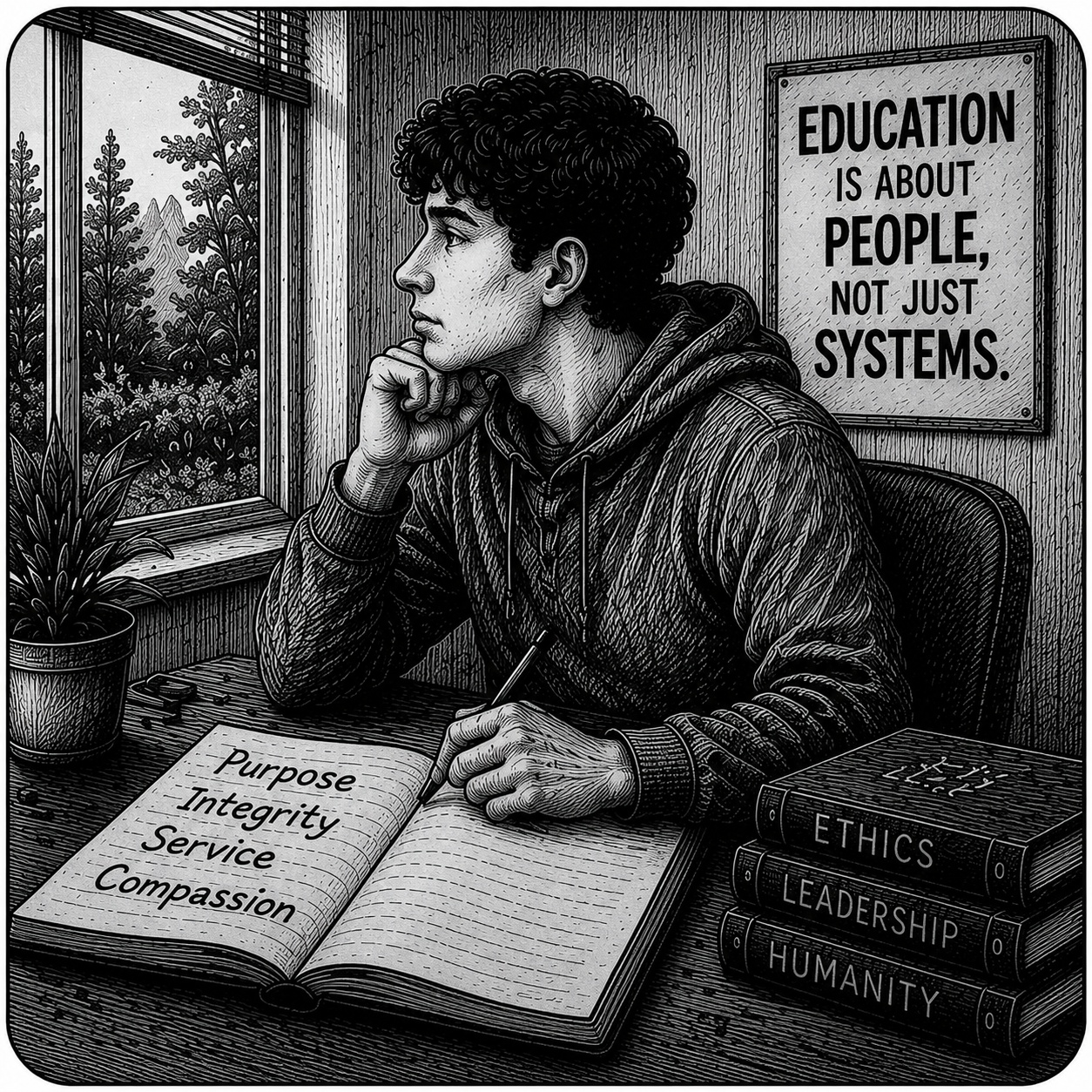
One evening, in the spring of that first year at Manlius Pebble Hill, I was reading Ruby a bedtime story. As I began to tire and considered leaving off for the night, Ruby wouldn’t have it. So she started sounding out the words and stringing them together. Before I could realize the significance of what happened, she was reading me the bedtime story.
A few days later, the school released its quarterly teacher comments. As I read through Ruby’s, Ms. Wells wrote about the development of her “pre-reading skills.” A few days after that we had our parent-teacher conference, so I asked her, “What do you mean by ‘pre-reading?’”
“I know,” she said with amazement. “It’s like she just learned to read one day, all of a sudden!”
Apparently that happens sometimes in early childhood development: big breakthroughs, threshold moments. Ruby was fortunate. It was harder for Will.
A couple years later, at the same spring conference, Kelly Wells was Will’s pre-kindergarten teacher. Because his birthday was late in the cycle, we were considering whether he should move on to kindergarten or spend another year in pre-k. Kelly was showing us examples of his work when she pulled out a handwritten alphabet. There was a nice capital A, followed by the lowercase version, then the pattern repeated with B, but left off with only the uppercase C. I admired my son’s fine work, then asked what I thought was a logical question.
“How far did the other kids get?” I queried.
Kelly looked at me with a slightly twisted face that conveyed puzzlement. “What do you mean?” she followed.
“I see Will wrote three letters. Well, two-and-a-half really. How many did other students write?” I clarified.
“They wrote the whole alphabet,” she said plainly.
“I guess we’ll be doing another year of pre-k,” I stated.
“Yeah, I think that would be a good idea,” Kelly said, smiling gently.
There would be no reading breakthroughs for Will. He learned to read by slowly decoding one painful word at a time. And right beside him was my colleague, Colleen Congel, pulling him from class for breakout literacy support. She counseled us as we wrestled with the ADHD diagnosis and concomitant medication question. She educated us, as parents, and me as an educator, about the ADHD brain, how it functions, and how to support its growth. We also learned how much emotional development, and damage, can accompany such a diagnosis. In the process, I became a better parent and educator simultaneously.
For every year until now, I have gone to school with my kids. I feel so fortunate to have enjoyed that experience for 16 years. The best parts of my work in independent schools have been the opportunity to watch my kids grow up right in front of my eyes, and the rich relationships I’ve developed with my colleagues/children’s teachers/parents of my students, which as the slashes indicate, were the same people. When you live and work so closely with people, you get to know them pretty well. They get to know you and your kids know one another. People matter in ways that transcend the formal nature of your relationships as colleagues. Those relationships became rich and dense and meaningful in ways I never anticipated, didn’t know I needed, and have come to cherish. So this work is personal for me. It has been from the start, and it’s only gotten richer and more meaningful as I’ve gone along.
Coming to EPS
Halfway through my visit day, on a Tuesday in early October of 2018, I walked in to the lunch interview in LPC 102. Around the table sat a dozen faces, mostly laughing or smiling, turned to the people next to them or addressing someone across the table. It was a lively scene, with laughter and conviviality. It looked like a dinner party among old friends. As they noticed me, one by one, attention turned for the “interview.” I was on the spot. They had questions. But I felt welcome. I felt “a part of.” It felt like a fun place to be.
I also felt the mutual affection in the room. I could tell that these people liked each other, and that they knew one another in the way that only comes through years of shared experience. They had been through tough times and come out the other side. They had probably hurt, or been hurt by, someone in the room, but they had done the work of repair and their relationships emerged stronger for it. These people worked together. They collaborated, and they respected one another. They felt like colleagues from the start.
As I learned about the school, I was drawn in by Eastside Prep’s founding educational principles, including inquiry, experience, and integration, which grounded the pedagogy. I found those represented in the diversity of course offerings, especially where student choice was centered in integrated humanities courses. I learned about our intention to be a school where all types of kids could learn together, celebrating neurodiversity as a bundle of disparate strengths rather than a collection of disabilities. I found that principle reflected in the school’s curriculum, which had no tracking, AP classes, or honors distinctions, as well as the robust learning support program, anchored by Guided Study Hall and a team of Learning Specialists whom teachers respected and regularly consulted. This felt like a place for me, as a teacher, and my kids, as learners.
I arrived in late June, about a week before my contract started. Terry told me, “the best way to get to know the Senior Leadership Team would be to join our end-of-year meetings.” So for that week I sat in, a bit disoriented, as the team processed the year, incorporating teacher feedback from the end-of-year survey into summer project plans. The energy was high, the pace blistering; these were smart people working hard, but enjoying themselves and one another as they did it. On Friday we had a dinner, which culminated in a series of toasts. Sam teared up as he delivered a heartfelt tribute to Bart, who was transitioning from Upper School Head to Associate Head of School, in appreciation for Bart’s leadership and mentorship over many years. In his response, Bart self-deprecated to invite a roasting, which was happily obliged by everyone at the table. Dr. Gary Chapman identified five basic love languages, but I found a sixth at the SLT dinner: sarcasm.
Student Leadership Council
I spent the summer getting to know teachers. I had coffee, tea, and quite a few lunches in Kirkland. Some folks met halfway between school and their somewhat distant places of residence. Melissa Hayes invited Will and me out on the coach launch to watch a rowing practice on Lake Union on a gorgeous August afternoon. And as the summer waned and classes approached, I held my first student meeting.
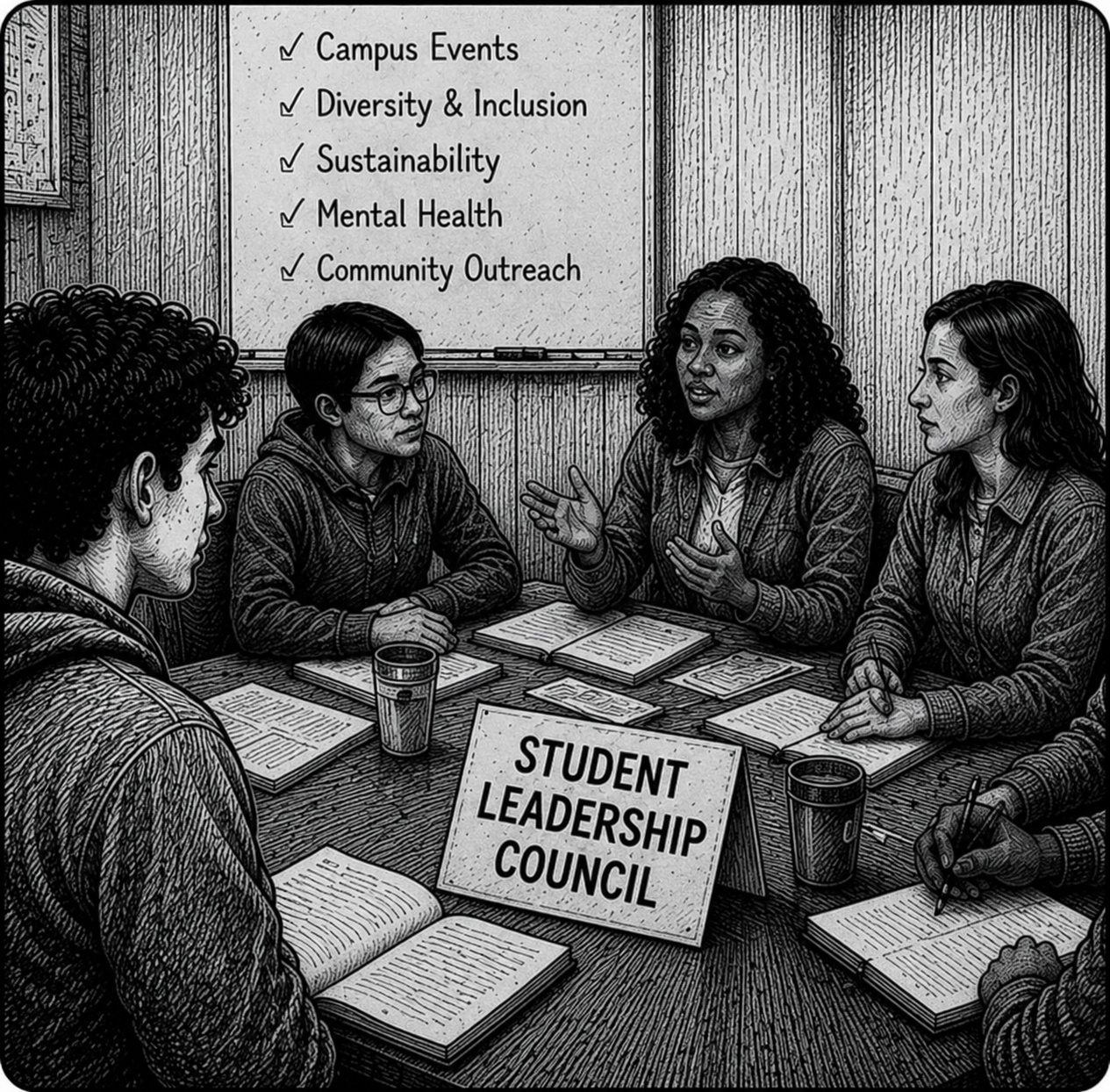
The previous spring, the members of student government refused to stand for election. They were fed up with what they perceived as an outdated and self-centered system, where students chose to run for the recognition of a title so they could list it on their resume without even trying to fulfill campaign promises. Past presidents and vice-presidents, they told me, had not been interested in service. This group wanted a model that centered servant leadership, a flat organization where students worked together for the betterment of the school, not personal recognition. But the work of changing a government structure is long and hard. It requires planning, communication, coordination, and public approval. There had not been time for all of that work in the spring, so we started the project in the fall.
I met with those students weekly for several months as we discussed their goals and priorities, developed a process to call a “constitutional convention” of sorts, and worked to communicate our progress to students and faculty. There were bumps along the way. In one public meeting a group of students shouted them down, accusing them of obstructionism and an authoritarian takeover of the government. Some of it was critical thinking in action. Some was meant to be in jest, a kind of political theater. And some feelings got hurt. But the Student Leadership Council (SLC) was born and it has endured.
Those first five students formed three committees, Community Outreach, Events & Student Culture, and Athletics, with two co-chairs for Outreach and Events. Since 2019, students have expanded their government to nine positions, adding a co-chair to Athletics, two co-chairs for the Equity, Inclusion, and Compassionate Leadership committee, and one chair for Fine and Performing Arts. The work of student government has expanded under the leadership and partnership of Karla Harris and Verity Sayles. As Student Life Coordinator and Associate Head of Upper School Karla and Verity promote and support student collaboration by modeling it with their own work.
Camp Seymour
Eastside Prep begins each school year with two orientation days in the first week of school. The ninth grade tradition is an overnight retreat at Camp Seymour, a YMCA camp on the Hood Canal. It is a beautiful setting with great facilities: a large dining hall overlooking the water, an outdoor amphitheater, and cabins spread across the wooded hillside, connected by a network of trails. The first day ends with a campfire as the sun goes down, and I was invited to say a few words of introduction to the gathered freshmen.
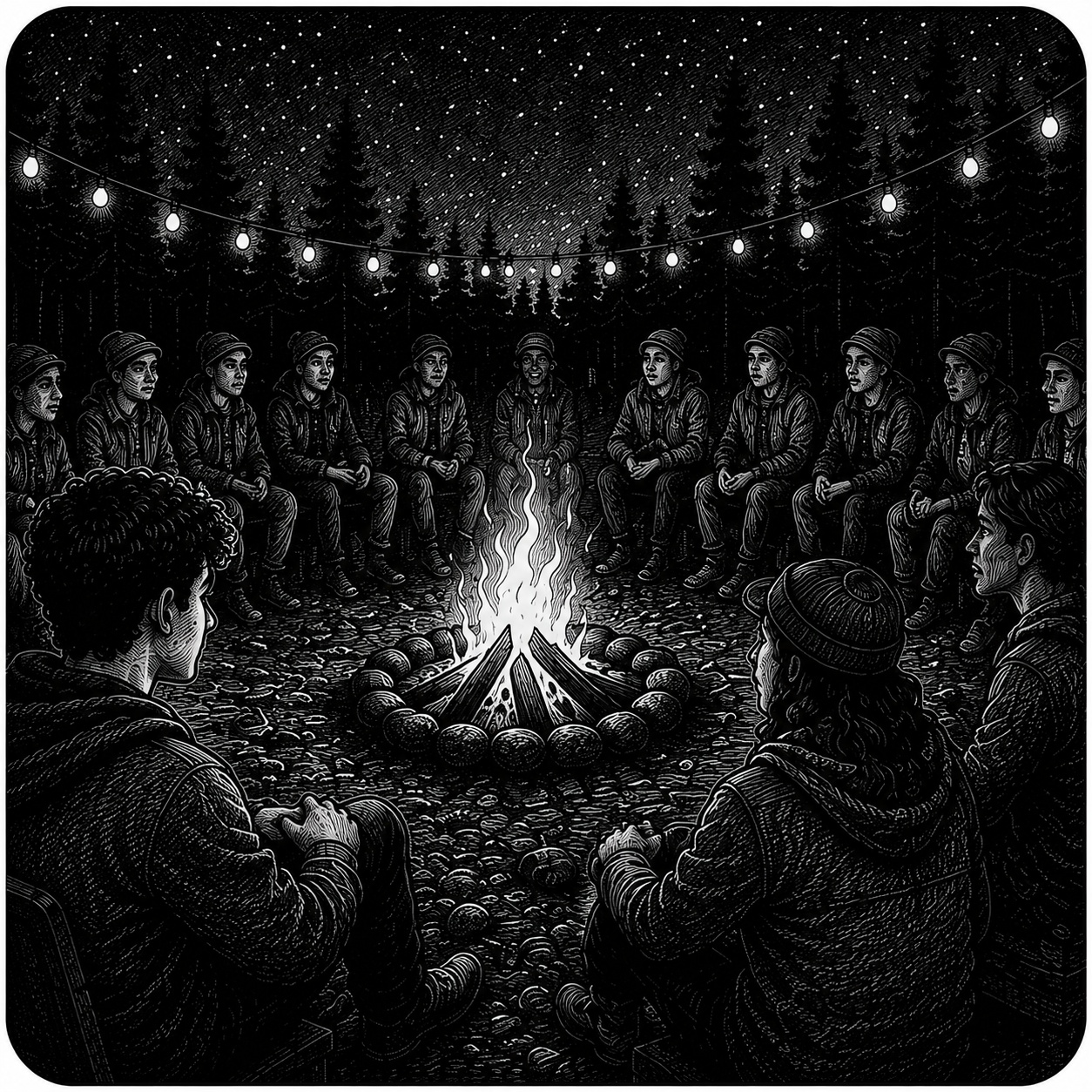
I was brand new. I didn’t feel like I had much to tell them about EPS, and I didn’t want to talk about myself. At the same time, I recognized that almost half of the students before me were new to the school also, ninth grade being an entry point where we add 40 or so students each year. So I asked them a question instead.
“I’m new to this place,” I said. “Just arrived in Seattle this summer. Some of you are new too. So for those of you who went to EPS in middle school, what do you think us newbies need to know about your school?”
A pause ensued. I wondered if I had opened a door I should have left closed. But then a quiet student way in the back slowly raised her hand. “People are kind to one another,” she offered hesitantly. Several heads nodded in agreement.
Then from the left side rose another hand. “We work together a lot,” she said, explaining the collaborative group projects in classes. More heads nodded with a little more enthusiasm. They were gathering steam.
Finally a boy stood up from the right, raising his whole body to address the group. “This is a place where you can geek out on anything you think is cool and no one will judge you for it!”
Kindness, collaboration, and geeks without fear of judgment; that was the moment I knew I had made a good decision to bring my family to Eastside Prep. That’s the kind of school I wanted for my kids. That’s the school I wish I had gone to. We were home.
Educational Philosophy
| Indicator |
| As a result of training, experience, and relational influences, has built and maintains a coherent educational philosophy. |
| Draws upon personal values and philosophy to guide decision-making and approaches to leadership. |
| Derives a sense of self, purpose, and personal meaning from vocation. |
| Personal investment in work is apparent to team |
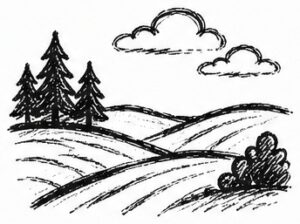
There’s an old saying, “If you don’t know where you stand, you’ll fall for anything.” A similar maxim exists in leadership, “If you don’t know who you are, you won’t know what to do.” Every day, so many factors, so many decisions, so many challenging interactions and circumstances, come flying at a leader in a fast-paced organization like a school. A leader needs footing and roots in the firm soil of lived experience, personal values, coherent philosophy, and principles of action, to thrive, and at times, survive. It’s ok to work these things out as one goes. In fact, that’s the only way it happens, but it has to happen. A leader needs self-knowledge. Developing one’s educational philosophy is a little like a journey across the vast landscape of a human life. In this section, features of the terrain serve as illustrative metaphors.
Country
When I would teach world history students about the development of modern political units, I would write three words up on the board: country, nation, and state. In some usage, we use all three words to refer to the same thing, but I would explain that each of these three, like most words, can mean different things in different contexts. While one use of the word “country” refers to a modern national state, another refers to geography, like “north country,” “out in the country,” or “country music.” The modern nation-state, then, is a merger of territory, people, and political unit. It hasn’t always been that way, and one way of teaching world history is to show how the world got that way. My aim in this section is to articulate who I am as an educator, and briefly explain how I got this way. Here I hint at it by describing one way that I think like a teacher: as historian. But there is more. Each is a feature of the landscape.
I am a pragmatic progressive educator. I believe in the principles of progressive education: experiential, student-centered learning that considers all aspects of a child’s human experience, guided but not directed by the teacher, who helps a student learn to think for themselves within the context of a collaborative community, as they navigate an integrated world and think within, across, and between disciplinary boundaries. I also believe that the school experience, even a progressive one, includes discreet skills and habits of mind, which are useful not only academic contexts but throughout life – things like planning ahead, organizing thoughts and materials, analytical thinking, and writing. In addition to thinking across disciplines, one can and should learn to think within them.
I have written elsewhere about how I was inspired by a particular teacher, within the context of a particular social science and its developed methods, at a unique moment in my life. To some degree, each of those things existed at other points too. I have thought long and hard about how and why that particular combination worked for me in that moment, and I am left with mostly mystery. The point, I think, is that we keep trying, keep searching, keep building and accumulating knowledge and skill until we get to the point where we find inspiration, breakthrough, and transcendence. There is no exact formula to create it. Finding academic purpose and meaning is more like alchemy than science. But I know that each factor – teacher, subject, and time – contributes to the breakthrough.
So the ideal academic setting includes elements of progressivism, centering the student, with practical tools that we know to be useful in varied circumstances. Those two sets of features exist in a generative tension, holding each other, as if by gravity, like twin moons circling each other, circling their planet. What happens if one set of features overwhelms the other? If one moon develops too much mass it pulls the other into itself, perhaps destroying them both and sending their material crashing into the planet or spinning off into space.
An academic environment that is too student-centered, relational, or holistic in its orientation lacks shared experience, standards, and metrics by which to measure or compare. If the student, or one particular educator, is the only judge of quality or value, the experience devolves into a kind of self-centered navel gazing. The student may feel good about their work, but they don’t really know where they stand in relation to the world outside of themselves, much less outside of their school. And when they enter that world, they lack direction, resolve, and resilience.
A school that is too traditional, that is to say, only focused on objective metrics and confined to established wisdom and conventional thought, does not provide the spark of curiosity or kindle the flame of intellectual inquiry. A student never learns to ask or answer their own questions. Their experience is replicable. It may even be efficient and highly quantifiable. But it offers little meaning to the student because they have no voice or agency. And when they leave a school setting, they struggle to apply the skills they have accumulated toward a purpose or to imagine how the world might be constructed differently.
The school I try to create, the one in which I learn best and the one that I believe best serves the most students, is one that combines the best attributes of each and balances them in a generative tension. Like the nation-state, the people and the polity inform and construct one another. Like a fertile valley, rain falls, it may even flood periodically, but then the sun bathes the land and feeds the plants, the animals, the people, and again the soil itself.
River
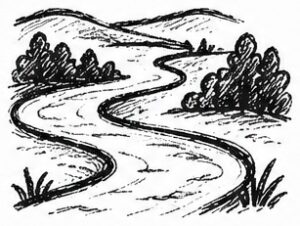
Snaking across the landscape runs a river. Water flows around rocks, falls over boulders, and cuts into hillsides along its course. The river shapes the landscape as it goes, wearing grooves into the soil and moving rich earth downstream, forming and transforming topography and ecosystem. Along the way, the river follows one simple rule: down. The river is called by gravity: down. Water seeking its source: down.
Unlike the river, I have more than one value. I am called to do many things in the course of a day, a week, a year. But the many are reducible to several core values and principles. For the purpose of illustrating how “purpose and values shape decisions” in my day-to-day leadership, I will share three. I believe these to be rules that govern the human experience of growth. As the physical world is governed by constants, like gravity, so is learning and community behavior.
Support includes adaptation and accountability.
I believe it is kind to provide structure and accountability to students and teachers. In fact, structure and accountability should be baseline conditions, with adaptation added when and where it is needed. Too often in schools, we use the word support as a synonym for flexibility and forget about the second factor. We start from, or move too quickly toward, a position of shaping and molding and flexing around a person’s perceived or expressed needs, without deeply considering the complexity of a person’s needs, and how the identified need is often a secondary need. To truly meet a person’s needs, we should instead support them in the process of developing self-awareness and identifying the many layers of human experience.
A brief example illustrates this principle. The tendency of adolescents to push boundaries is as old as time. Teens are evolutionarily programmed for this behavior, and it is a natural part of human development to seek the limits of what is culturally and socially appropriate. Adults may perceive boundary pushing as an aversion to authority, when in fact, it is an attempt to find and clearly understand the limits of authority. While the behavior may be perceived as risk-taking, and it may be legitimately risky, teens are seeking the safety and comfort of knowing clearly where the boundaries lie. And the healthy, constructive adult response is firm, gentle, and consistent reminders, not a continual creep of expanding limits.
Students have many needs, some of which are precursors to others.
Educators want their students to be happy and healthy and whole. And I think we might all agree that wellness requires that a series of human needs be met. Abraham Maslow articulated these as a hierarchy, often represented visually as a pyramid. When we formulate plans to support students, parents, or teachers, we must remember how several categories of human need are arranged in a series (or hierarchy) and attempt to build strong foundations at prior levels.
When working with parents, I have come to understand how scary it is to watch your child struggle and what an awful feeling of powerlessness one has when they are unable to meet the needs of their child for belonging or effectiveness in school. Parents have a primal need to care for and protect their children, and the learned and lived experience of providing for all their children’s needs across stages of child development, from newborns to infants, toddlers, and preschoolers. When children enter school, and especially as they transition through adolescence, parents become less able to provide for basic needs, especially when it comes to social acceptance among peers and competency with increasing and expanding cognitive demands. When a parent arrives in my office concerned about bullying or missing assignments, they often present as angry. But to support them effectively, I have to remember that behind their anger or frustration is fear, and meet them in that place where they need calm and steady reassurance that “this too shall pass,” and that the current moment of challenge is a necessary phase in the progression and fulfillment of their child’s expanding series of needs.
Relationships grow stronger through harm and repair.
I don’t always get it right. I make mistakes. Sometimes those mistakes hurt people and lead to conflict. Mistakes can be corrected; harm can be repaired; relationships are built as this process unfolds and is repeated. We often think and talk about trust as a key component of relationship and partnership; it most certainly is. However, we underestimate the resilience of relationships to endure breached trust, if and when it is properly repaired. What’s more, relationships are actually made stronger through the process of harm and repair.
Think of your best friend or life partner and ask yourself a series of questions. What feeling comes over you when you hold their image in your mind? How long have you known that person? What have you been through together? What parts of those experiences were hard? Did they ever result in conflict or periods of separation? How did you overcome those? What is the relationship between the series of experiences you’ve shared and the feeling that you now hold?
When I ask myself those questions, I am able to see that my most valued relationships have endured periods of frustration, conflict, and separation. The value that they now carry results, not only from the fun and affinity we shared, but from the constructive and sometimes painful combination of hurt and healing. I feel confident that I can count on that person when everything falls apart because it has, and then we put it back together. Since schools are organizations that bring lots of people together for inherently limited periods of time, we too often take a short-term view of people and relationships within the school, and therefore don’t invest the time and energy required to resolve conflict and repair relational harm. In fairness, this is hard work, and both parties must be willing to deeply engage consistently over time. We can’t all be best friends, that’s why best friends are singular. But as we navigate many lesser relationships, we can be guided by the aspirations we develop with our besties.
Mountain
Why do people climb mountains? “Because they are there,” the saying goes. I like a challenge. I like the feeling of stretching myself. I know that I’m growing and getting stronger when my muscles are a little stiff and sore. My body tells me I did a hard thing. The mountain is a universal metaphor for challenge. People climb mountains to test themselves, and many parts of school feel like mountains to me. The world is made of many mountains.
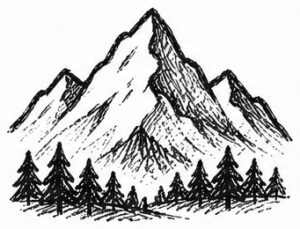
I struggled in school…a lot. When I was in middle and high school, even though I had friends, I didn’t feel like I belonged. Even though I got good grades, I didn’t feel smart. Even though I was curious about things, I didn’t work hard to find things out. How could that be? When I got to college, I got excited about ideas in a way I was not in high school, but I didn’t have the skills or the habits of mind to fully explore them and learn deeply. In mountain climbing terms, it was like arriving at the tree line, where forests and meadows turn to ice fields and rock faces. I arrived with only the boots on my feet and a small day pack. I didn’t have the equipment or the skill to reach the summit.
When I came to the classroom as a teacher, I had finally, sort of, figured out how to learn deeply. I say “sort of” because while I found success in college and graduate school, I had not yet finished the terminal degree and I still struggled with direction, doubt, and procrastination. But I was determined to provide my students with two things no one gave me as an adolescent: inspiration and discipline. I infused my classes with those two things, ambitious as they were, and when I didn’t live up to my own standards, the imposter syndrome set in. Teaching well is a continuous striving toward the top of the mountain. Each day, the teacher plans to execute the perfect lesson, but most of them fall short. Once in a blue moon the teacher feels the wind blow clear and strong across the mountainside, each student stepping with purpose and precision, roped together in synchronicity. I had some moments like that.
Transitioning to school leadership, the peaks seemed higher and the pitches steeper. High school teachers are trained critics, practiced in the art of scrutiny and fiercely independent. Parents have high expectations for a positive experience and are known to get feisty when their children struggle, as students sometimes should if challenged appropriately in a prep school environment. Beginning as a teacher, but accelerating as a leader, a third dimension of ascent opened up for me: an emotional terrain.
To be clear, there was always an emotional component of the school experience in play for me, I just didn’t recognize or understand it as such. I’ve said before, when I began teaching, I found myself physically fatigued from the emotional labor of leading a classroom and interacting with students. As a school leader, that field was amplified. It felt like the stakes were higher and I questioned myself, my decisions, and my impact on the institution on a larger scale. It was also at this point that I began to think systematically, scientifically even, about emotional intelligence and social-emotional learning. I started to see and understand the field I was navigating more clearly.
Parenting two neurodivergent children in the same school where I worked coincided with my developmental arc of emotional growth. My children began to struggle in school, and I struggled to support them as a parent. I have spent my entire life in school. I’ve made it my business to educate children and support the adult parents and teachers who raise them. And there I was wandering about, lost and confused and scared. I felt like a failure. I felt like an imposter. I tried to bring the skills I had honed in my own educational journey to bear in this newest phase of challenge: inspiration and discipline. It felt incomplete because I was really only able to sprinkle in some emotional acumen across the surface of our experience.
In the last ten years I believe the emotional field has become more deeply engrained in my school work: as a parent, a school leader, and as a learner. I more fully respect and understand the importance of emotional safety, intelligence, and maturation across many dimensions of school. This transition has not come without its own set of doubts, insecurities, mistakes, and many, many growth opportunities. I still don’t think or act intuitively in this dimension, so I’m slower to find my footing as I process emotion through the front half of my brain. But I’m making progress and committed to continual growth.
At the end of the day, I work in schools because I love to learn. I never want to stop learning and growing. So what do you do when you get to the top of the mountain? You take a moment to enjoy the view from that summit and then start down again.
I have recently encountered a thing called “the path of descent,” which many people begin to experience as they cross a threshold into the second half of life. At the moment, I’m exploring this idea, wondering if it’s happening to me, and feeling my way tentatively along the first few kilometers of the trail. It’s about feeling full enough, a gradual release of the striving and determination that compels many of us forward in the first half of life. It’s an acceptance of what is and what has been. And it feels good and whole and peaceful. I like it.
Sunset
This past fall, I walked the Camino de Santiago with my cousin, who is probably the person who has known me the best and the longest in this world. It was a momentous journey, filled with personal meaning and significance. But it happened in the middle of October, as school was in session. I hesitated to even ask if I could go. And when I was approved and supported in going, I struggled to know how to present this experience to the faculty. It felt personal, and I’ve had a hangup about separating the personal from the professional. It didn’t seem appropriate.
The Camino walk is a religious pilgrimage, perhaps the most historic and significant in the European Christian tradition. It follows old Roman roads across Spain and Portugal, to arrive at the Cathedral of Santiago de Compostela, where the remains of St. James the Apostle are reputedly housed. Along the way, pilgrims follow the footsteps of many thousands of pilgrims who have walked those roads since the Middle Ages. Our particular pilgrimage journey was a cohort experience, guided by my cousin, who is a pastor in western Canada. The journey began six months before with a retreat in San Diego where I met the fourteen other pilgrims, three guides, and several others who would lead our journey. Each month afterward, we shared assigned readings and half-day Zoom calls with a faculty of elders who guided our preparation, study, and reflection. The experience was intended for white, male Christians in leadership position to discern how we can use our positional authority and socio-historical privilege to live and work out God’s calling in our lives.

This was a richly personal experience for me. It helped me understand and heal from several personal tragedies that I have experienced in my lifetime. It also helped me take stock of my life and career, think about the parts of my work that are most personally rewarding, and which contribute the most and the best to the collective needs of the school community and society at large. The concept of two halves of life framed our considerations, a notion explored by authors Richard Rohr and David Brooks, which suggests that as human beings approach the sunset of their careers, family lives, and working years, their priorities begin to shift. It’s almost as if the hue cast by the setting sun changes the colors of our perception, and pursuit of career accomplishments begins to give way to other matters of more personal significance.
I could go on for several pages about the particular ways that this idea resonated with me, but that’s not my purpose in sharing it here. Instead, it illustrates a way that I have begun to think differently about the separation of personal and professional as a feature of school leadership. On one hand, I had not previously shared my faith with many people at school, but that was unavoidable in explaining my absence for the Camino trip. But when I did, I received supportive comments and gestures, including an appreciation for opening up. It also led me to share one of our books with colleagues and start a reading group centered on an exploration of patriarchy and the way this system of domination hinders men from developing and expressing healthy forms of masculinity, a subject that is relevant to our school community and the ways men and women partner in collaboration and other shared aspects of working life.
For most of my career, it has been important to me to lead by example, to work hard alongside the people I lead, and to “get my hands dirty” in our shared practice. Sometimes that means initiating a project personally or putting myself out there in the experimental or pilot phase. Other times it means working long hours, answering emails and taking phone calls in the evening or on weekends, or showing up for plays, concerts, and sporting events. I viewed my continued teaching practice as another expression of this personal value. At EPS, I try to join Orientation and EBC trips in some capacity, in part to share the experience with students, but also to show teachers that I’m willing to do some of the less comfortable aspects of our work alongside them. I have also frequently reflected that my experience as a parent has made me a much better teacher and school leader, and that my work as an educator has made me a better parent. But sharing the Camino with colleagues was a different level of transparency and vulnerability for me as a leader.
I have tried to carry that learning through the year and it became an organizing principle for the development of this PDP. I hope my words carry earnestness and sincerity in addition to vulnerability and truth. As I transition into the second half of my working life, and walk toward the sunset, the dying light falls on work and personal life together. I no longer want, or need, to keep two halves of my life separate. I want an integrated life, and I don’t think that will come at the expense of my effectiveness as a school leader or my health and happiness as an individual. To the contrary, it seems to make them both richer.
Community Values
| Indicator |
| Prioritizes collaborative approaches to projects and problem-solving. |
| Supports and implements the principles of diversity, equity, inclusion, and compassion in projects and interpersonal relations. |
| Leads with curiosity, wonder, and inquiry, withholding judgment until decisive moments arrive. |
Values guide our thinking and decision-making. If our philosophy is the country we inhabit and traverse in the course of our professional journey, then our values are a map of that land. They help us look ahead and plan. They guide our responses to emerging conditions. When we are lost or confused, we pull out our maps to reorient. They point us in the right direction and indicate how far we have to go. They may even tell us which route to take and whether that road is long and curvy with detours and stops for gas and snacks, or whether we take the broad highway to most quickly and efficiently reach our destination. And just like maps, especially old historical ones, with pictures of sea monsters and blank spaces for uncharted waters and the unvisited interior, our values are works of art. They inspire us to strive and be our best selves. They fill us with pride and sorrow. They hold inherent beauty and move us toward greatness.
Rose of the Winds
Most human cultures and languages contain four cardinal directions to give people points of bearing in space. Many traditional cultures include references to features of the landscape, like a coast line or mountain range in the construction of cardinal directions. In contemporary western society, we commonly call these cardinal direction north, south, east, and west. Although these bearings are conceptual, they point to concrete directions, like the origin and destination of prevailing winds, the path of the sun and moon across the sky, and the migration of the sun at midday over the course of the year. Western maps contain a little star, like the one on a Mariners cap, that orients the map to the cardinal directions. Since the Age of Exploration in European history, this star has been called by several names. Seafarers once called it the “rose of the winds.” Now that more people travel by car than boat, we call this the compass rose or star.
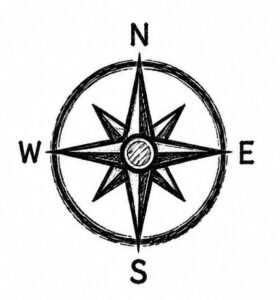
At Eastside Prep, we have several shared values that serve as our compass rose. Because they are four, we may easily recognize our critical thinking, responsible action, compassionate leadership, and wise innovation mission points as cardinal directions. I can even imagine the TALI shorthand arranged around the star, with “Better World” written in the center. When it comes to curriculum and pedagogy, we might think of “inquiry, experience, and integration” as cardinal directions. These values orient us to our work and purpose, and serve us well as we navigate a complex world, with nuance and ambiguity all around us.
When I describe our school to candidates in an interview, or tell people what I most like about working at Eastside Prep, one of the first things I point to is our collaborative spirit and practice. But collaboration is not easy. Working together collaboratively requires sacrifice, compromise, lots of discussion, and plenty of time. It takes longer and stretches us more. We believe it produces better outcomes, if not always for us individually, then certainly for the program and the student experience as a whole. Sometimes collaboration requires us to set aside our individual goals, or at least a portion of them, and make time to listen to one another very intentionally.
In the last couple of years, I have been working to coordinate aspects of our academic program for juniors and seniors. As students approach their final years in secondary school, we target several parts of the program toward specific goals, including College Counseling, Independent Curriculum, and Advisory. This year, we are piloting an internship program and in the process of developing a set of competencies to document student progress in the hopes that we might be able to quantify and evaluate student progress sufficiently enough to award academic credit to the experience. These efforts require collaborating intentionally with several members of the Senior Leadership Team, including Jonathan Briggs, Matt Delaney, and Bart Gummere. Looping Advisory into the mix includes Anne Duffy, as the 12th grade GLC, and our internship partners include Colleague.ai and alumnus James Rimmer at the Snoqualmie Mill real estate project.
As a division head, I work with Sarah Peeden to align and create equity between the Upper and Middle School divisions. We frequently reference shared calendars of division meeting topics to ensure that we’re covering similar ground with faculty. We take care to consider how individual projects impact each other’s work, as comparisons between the divisions are persistent and inevitable. In addition, we develop shared projects, like the multiyear effort to re-evaluate grading and assessment practices and the more recent development of a curriculum mapping tool with Matt and Jonathan.
Sometimes we find the limits of people’s willingness and capacity to collaborate. In recent years we have encountered resistance from teachers in their co-teaching assignments, where we need more than one teacher to staff the five or more sections of a given class. Teachers sometimes prefer to have a class to themselves, which may reduce prep time by eliminating meetings and providing greater autonomy and individualization of a course. We have found that without shared staffing, we lose a measure of intention and coordination in the vertical alignment of our curriculum. Students have more varied experiences and expectations placed upon them as they move from year to year in a course progression. Although it is sometimes a big request for teachers to share courses, Sarah and I make the ask because it represent our north star value of collaboration, and we make certain to live out that value in our own work.
Collaboration is hard, and we don’t want to make things harder unless they produce better results. We believe collaborative efforts bring more insight and critical thinking to a project. The act of aligning insight, interests, and perspectives makes the outcome work better, for more people, in more circumstances. And the sharing of perspective builds community ties, boosts inclusion, and increases belonging. If we only built a program from one perspective, it would be less likely to work well for people with different experiences, aptitudes, and identities. When we, as leaders, ask people to expend more effort, we need to not only be willing to do our own work in this way, we should be concrete in our thinking and clear in our communication about what benefits will accrue from that effort.
Scale
Somewhere in the corner of most paper maps sits a little set of horizontal bars that indicate how much distance is equivalent to a given unit of measurement. A city or regional map may equate one inch on the map to one mile in real space. A state or national map could signify 25 or 100 miles per centimeter. Reading a map is an act of interpretation, and the scale provides the reader perspective to help them understand the meaning of what they’re looking at.
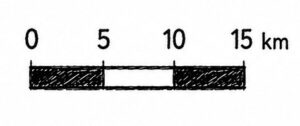
For me, equity and inclusion work is a little like using a scale to read a map. As a white cisgender man, most of the world is structured to center my identity. I experience privilege every day, in countless ways, many of which I am rarely aware. In order to build my awareness, I have to read the world around me with intention, understanding, and perspective-taking. It takes effort on my part to unpack the historical, social, and personal privilege I carry, and it’s hard work to consistently remind myself of the very different lived experiences of students and colleagues that I’m working with. To illustrate, let’s examine three primary identity categories that shape student and faculty experience within the school.
Race
As a graduate student, I learned a lot about how race has operated to structure the human experience in the Americas. In the United States, the combination of a largely homogenous white settler class, indigenous genocide and erasure, and the forced migration of millions of enslaved Africans constructed a binary white-black racial imagination in the historical consciousness. Across Latin America, the story was more complex. Indigenous and African majorities and a long history of racial mixing led to the celebration of indigeneity and Blackness in some national communities, and racial identities became more subtle, fluid, and varied. In all cases, my understanding was built historically and with abstraction. Grappling with the ways in which race shapes the experience of students and teachers at EPS, and learning how to affect positive change as a school leader, has proven harder for me.
Our student population is quite racially diverse. In fact, more than half identify as students of color, although a very small percentage identify as African American. So to be a Black student at EPS is an uniquely isolating experience. Meanwhile, the parents of many students of color migrated from South and East Asian, where racial history, legacy, and dynamics are different still. At times, equity, inclusion, and compassion have been hard to uphold equivalently within this demographic and cultural context, especially with student disciplinary cases. I find myself simultaneously trying to educate, hold accountable, represent, and uphold our EICL values in very contentious situations, where harm coexists with shame, and fear of marginalization within a “cancel culture” coexists with the ongoing marginalization of under-represented students in our elite prep school. As a white school leader, I cannot speak from the “I” perspective about marginalization in the same way that either the offender or the harmed are experiencing it. But I recognize my role and responsibility, so I lean into discomfort, work to educate myself, and partner with those who know more than me whenever possible.
Gender
Navigating gender within our community is similarly challenging and personally significant to me. In feedback I have gathered within the division and from school-wide conversations, two predominant concerns arise. First, the gendered composition and dynamic of the Senior Leadership Team has been identified as a point of inequity. As a member of that team, I recognize the concern, and wrestle with ways to improve. Second, gendered dynamics within teaching partnerships leave some women feeling like they are tasked with a disproportionate amount of menial and organizational tasks, like preparing shared resources, PowerPoints, and assessment materials. As a man, I recognize that I am caught up in these dynamics, in some ways complicit and in other ways inescapably trapped. I can’t negate or change my identity, so I’m left to figure out how I might use my identity and associated privilege to positive effect.
Last spring, an opportunity presented itself. As part of my Camino preparation, we read bell hooks’ The Will to Change, which presents patriarchal masculinity to the reader in a very understandable way, which I found illuminating and uniquely empathetic to men. hooks makes no excuses for men and confronts the manner in which patriarchy harms women. But she also shows how within the construction of patriarchy, men are denied essential aspects of the human experience, notably the ability to feel and express emotion. So the reader is left with an understanding of how patriarchy is bad for all human beings. It amplified my own urgency to smash the patriarchy, and I thought it might have a similar impact on others in our community. So this year, several teachers and school leaders have joined me in a book group to read, and meet monthly to discuss, hooks’ important and impactful work. She, as a Black woman, has helped us learn and better understand the masculine experience of patriarchy and improve.
Class
It is difficult to talk about class in an environment where a teacher’s annual salary is the equivalent of two students’ tuition costs. Consequently, I don’t think we talk about class enough in our school. Many of our families are extraordinarily wealthy, and while money is one component of class, there are deeply-engrained beliefs and lenses through which people view the world that are associated with wealth, and therefore differ depending on the size of one’s bank account(s). What’s more, class aligns with, or against, other historically marginalized or centered identities that people hold, thereby complicating our efforts to build diversity, equity, inclusion, and compassion within our community.
The EPS partnership with Rainier Scholars highlights some of these issues. As a function of their mission and purpose, Rainier Scholars come from families with low income and parents who do not hold a college degree. Many families migrated to the United States within the lifetime of the Scholars themselves, and live in impoverished sections of the Seattle Metropolitan area. Therefore race, class, nationality, neighborhood, and in many cases gender combine to make the experience of a Rainier Scholar maximally different from that of an Eastside family with an income high enough to afford tuition. How, then, does a Rainier Scholar enter and leave our community? How does their time here shape their educational experience, or their view of the wider world? How does it shape their view of themselves and how they fit into that world? What can we do to prevent, or at least limit, harm associated with these several overlapping and mutually reinforcing systems of domination?
I don’t have overarching answers to these questions or solutions to the associated problems. I believe that we will only succeed in working toward a better world one small step and decision at a time. And I’m committed to working toward a better version of the human experience for every member of our community. I believe that a focus and emphasis on our shared humanity is the only thing that will bring people to work together for a mutually better future. We can all find something of ourselves in one another. We all need love, purpose, belonging, and security, just like we all need air to breathe, water to drink, and food to eat.
Legend
When I was younger, maps were functional and necessary to get you where you needed to go. Before my family would take a road trip, we would stop by the local American Automobile Association (AAA) office for a TripTik. As a Triple-A member, you could describe your origin and destination and they would produce for you a flyer size collection of maps that routed you one leg of the journey at a time. In addition to mapping the roads, the TripTik provided a series of suggestions for fuel stops, restaurant and potty breaks, and roadside attractions. But the TripTik’s main advantage was that it didn’t require the navigator to unfold the map across the dashboard as the driver demanded, “Well, was that our exit or not?” from a quarter mile past the offramp. I haven’t thought about getting a TripTik for years because now I use my phone to get me where I need to go, but out of curiosity, I checked out the AAA website and it turns out they now have a TripTik app. I’ll give it a try on my next road trip. I should’ve guessed there was an app for that too.
Even if I don’t need a map to direct my travel in most circumstances, I still love to look at a map and wonder. It helps me form a mental image of a landscape or a region. I have a giant map of the Northwest Coast on the wall next to my desk. Vancouver Island is set in the center, with the Salish Sea spread out to the east and south. The compass rose indicates the map is tilted right, at least as it orients to the earth’s axis, and the latitude and longitude lines fan out diagonally. I can see how the land drains through the many waterways, and routes across the major sea lanes are depicted with red segmented lines. Underneath the scale, which explains distance in both miles and kilometers since the map includes portions of U.S. and Canadian territory, sits the legend. The legend tells me the thin-dashed red lines represent ferry routes, while the thick-dashed lines mark the cruise ship routes. Other symbols indicate parks and wildlife areas, marine and seaplane facilities, historic sites, and even shipwrecks. The legend helps me decode the markings, but in the blanks spaces, plenty of wonder and imagination remain.
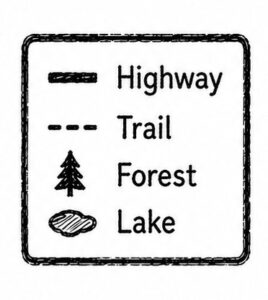
So it is with much of my work as a school leader. As Socrates is widely quoted, “The only true wisdom is in knowing you know nothing.” I wouldn’t go quite as far as the ancient master, as all of the preceding text attempts to articulate the things I have learned from my life in schools and work as an educator. I believe there is much wisdom to be found. But at the end of the day, or more to the point in a given moment, I have to hold humility in the front of my mind as I approach every situation. I can be guided by research, best practices, and past experience, but unless I’m approaching a new situation with curiosity and asking questions, I’m setting myself up for mistakes and potentially harm, to individuals, relationships, and the community ties and culture of the school.
It is important to open every project with questions, lots of questions. Who does the project serve? Who do we need to contribute? How will it be implemented over time? If we are updating or replacing an existing system or structure, what will be gained or lost in the transition? Who is currently very invested in the system and how might they respond to changes? Why don’t we ask them? As we proceed through the questions, answering one at a time, we document our findings, report back to those we’ve surveyed, and provide an update on progress and changes.
When approaching people, I try to set aside assumptions that I may have about their thoughts and feelings. Even if I’ve had 20 interactions about similar issues, I ask them again, honestly and openly, to give them the opportunity to form and express their opinion anew. If someone responds or approaches with strong emotion, I pause and tell myself their feelings may be informed by more than the issue at hand or my presentation of it. “Everyone you meet is fighting a battle you know nothing about,” helps me cultivate compassion and detachment, and prevents my own emotions from spiraling escalation.
As I gather information, I will necessarily have to fill in gaps, as some true feelings are hard to access by leaders in schools. Positional authority sometimes discourages folks from communicating directly and clearly, so it helps to have an ear to the ground. But distinguishing the teacher discourse from gossip and the rumor mill is an inexact science, so before I act on something I hear third hand, I try to confirm it by approaching the source as directly as possible.
Inevitably, the moment of decision will arrive. And when it comes, I must be willing to act and stand by it. As soon as a decision is made and communicated, I begin to hear feedback, and I am much more likely to hear from those who oppose a decision than from those who support it. So I need to stand firm for a while to let the initial reaction pass. In time, I will reflect more deeply on the decision and manner in which I arrived at it. Here again, I need humility, open-mindedness, willingness to admit mistakes, and latitude to reconsider if warranted.
It is my sincere hope that the entire text of this PDP may serve as a kind of legend to the map of school leadership. Each domain, category, and indicator is a symbol representing the most salient features of the leadership landscape. But just like a map, it is a representation of leadership, not the actual thing. The leader must navigate the actual terrain, by land, sea, or air. The leader inhabits the space, encounters the people, observes the landscape in the changing light. It is only by doing that one can know, and as a result, recognize the limitations of that knowledge.